Tips for Pounds Rehoming Pets
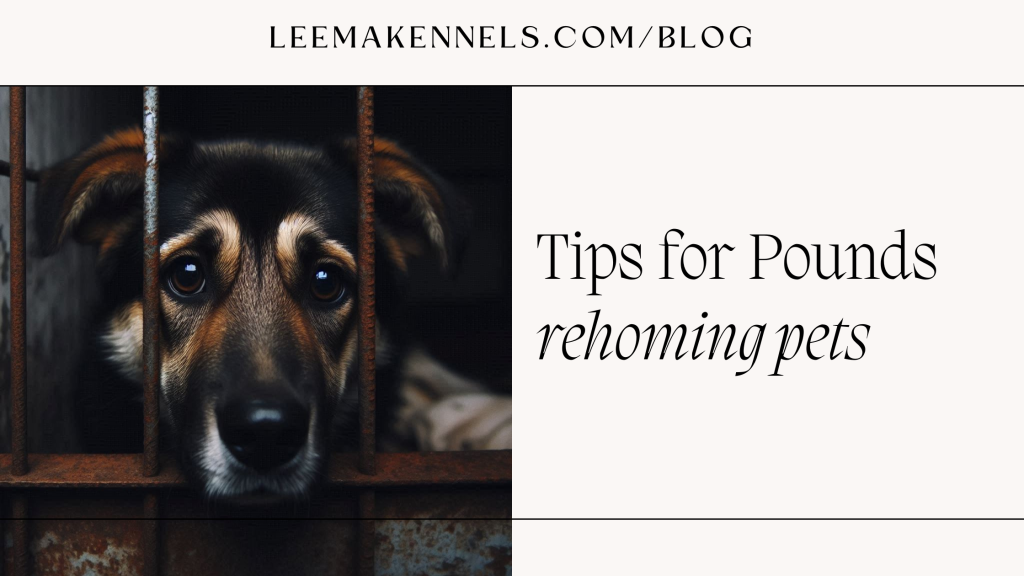
Currently, there is a large demand on pounds and rescues in South Australia. Compared to the ‘boom years’ of COVID-19, there is now a cost-of-living crisis, in conjunction with a housing crisis, which is seeing many households forced to surrender their animals or unable to afford to reclaim animals from pounds.
Personally, I have been contacted by several councils in South Australia looking for surrender options. Excess animals in care is a problem for council pounds in South Australia. This article looks at ways that councils can reduce homeless animals, by:
- Reducing impounds
- Increasing returns
- Rehoming animals
1. Reducing Impounds
Councils can undertaken a number of actions in order to make sure that dogs never end up in their facilities in the first place! This includes:
In-field microchip scans
If an animal is collected in the field, rangers should be equipped with a microchip scanner and the ability to immediately look up the owner details. The ranger should not only use the DACO database, but also use all national databases across Australia.
Utilising any other identification
Some animals may wear identification, and rangers should call numbers on this identification. There are also some QR tags and capsule-like identification options. Rangers should be across all these forms of identification. By contacting an owner while in-the-field, the ranger can then return the animal without it ever being impounded.
Check lost records
Many councils encourage owners to report missing pets to them. These records should be checked prior to impound. Rangers can also check Facebook groups (such as Lost Pets of South Australia and Lost Dogs of Adelaide) or pages (local to their community) to see if there are any lost animal records. Again, if an owner is identified, then the animal can hopefully be returned without impound occurring.
Door knocks
Animals are often found close to where they live. Rangers should door knock homes within the area that the animal was collected to identify ‘leads’.
Note that while an animal may be returned prior to impound, this does not mean that the owner is not due recourse in keeping with the Dog and Cat Management Act (see PDF). Council can choose issue expiation notices to animals who are roaming at large, even if the animal is returned prior to impound.
If an animal is impounded, council should have a proactive system to check ranger process. An animal that is not returned prior to impound should be considered a failure. What went wrong? Was the animal checked for identification? Were lost records checked? Were door knocks completed? Councils need to implement robust processes to prevent animals being impounded.
2. Increasing Returns
If the above fails and an animal is impounded, then councils need to take immediate action in order to get that animal home again. These strategies can include:
Medical care, including vaccination
An animal cannot return home if they are dead. If an animal enters the facility, they should be given preventative care, including worming and vaccination. This helps to minimise the risk of animals becoming unwell while they’re impounded. Additionally, if an animal is impounded with broken bones, significant mange, or open wounds, it requires veterinary management. All medical expenses can be invoiced to the owner on reclaim.
Impound photos and distribution
When an animal is impounded, staff should take a clear image that shows the features of the animal. Photos that are blurry or distorted are not useful for reclaims. Once this image is taken, it should be distributed widely, including the council’s website and Facebook page. (Again, Lost Pets of Adelaide and Lost Dogs of South Australia can be used.) Keep in mind that pets sometimes travel far before they are impounded, so advertising just in one council region may not be sufficient in getting a pet home.
Accurate impound description
Some of my friends have a running game where we share hideous mis-descriptions of dog breeds shared by council. I say ‘game’ but, in reality, this can be lifethreatening to animals. If a dog is impounded and described as a ‘staffy x’, when in reality the dog is a Boxer, then a person looking for their pet may dismiss this animal based on the description. The description needs to be accurate. Research shows that people cannot guess a dog’s breed based on its appearance. Councils need SOPs to help guide them in creating accurate descriptions. Instead of using breed, they may describe coat colour and type, the animal’s size, the set of their ears, and distinctive features.
Additionally, get the sex right! Have a look or a grope for external genitalia and use it in the description. Don’t guess. Put unknown if the animal can’t be handled.
Impound microchip check
Out in the field, it is difficult to do an accurate and comprehensive microchip check. If an animal is impounded, then councils should:
- scan the dog’s whole body for a microchip,
- with a reader that is 100% charged,
- and, once complete, this process repeated by a second person with a different fully charged reader.
That is: 100% of the dog is scanned with a 100% charged readers by two different staff members using two different readers (that is the 100%x100%x2x2 method). Staff should assume that every dog and cat is microchipped, as is South Australian law, and work hard in order to find this microchip.
Following all leads
If identification is found for the animal, but the person contacted says the animal has been moved or rehomed, then keep going. Ask them who they rehomed the animal to. Ask them for the contact details. Contact the emergency contact. Call the private microchip databases and check that there is no microchip change pending. Contact Dogs SA, if the dog is a purebred, to see if the microchip is on their database. Dig and dig and dig until you find who owns the animal now.
If the phone number doesn’t work, send a registered post letter. If they have a residential address, rock up to the address and ask them about their animal. Use the email address listed. Contact the emergency contact. Microchips are mandatory because they’re a valuable resource, but only if animals are checked properly for a chip and then the databases appropriately used in aid of reunification.
Be open for reclaims
So many pounds are open 9-5, Monday to Friday, or worse. For the typical person working full time hours, they can’t get to the pound to reclaim their pet. Your opening hours should not prevent returns. Open late at least twice a week. Open on weekends. If it’s really hard, open on appointment only, or deliver the animal to an agreed location for the owner to reclaim. By all means, charge owners for these kind of services, but don’t deny the service all together.
Animals are not held hostage
It is reasonable for councils to charge a fee for animals who are roaming at large and who utilise council resources. However, animals should not be held hostage until fees are paid. If someone neglects to pay their rates, you don’t repossess their house. Animals are sentient and sentimental and the idea that councils still emotionally blackmail owners to reclaim pets only when fees are presented is at odds with sound animal welfare policies. Let people take their pets home. Implement debt collection processes as necessary, but just let them take their pet home.
If an animal reaches the end of its mandatory hold period, then there has been two failures: The animal was impounded in the first place and, then, the animal’s owner wasn’t reunified with their animal during the impound period. Again, council should have an evaluation at this point. What went wrong? How was reunification attempted? How many phone calls were made? How many enquiries fielded? Collect data in order to ensure that necessary internal processes can change and improve.
3. Rehoming Animals
It’s unfortunate that a council gets to the point that an animal needs to be rehomed. However, if the council has failed to both prevent impound and encourage reclaim, there is a number of ways in which council can ensure animals leave the facility to new homes. This includes:
Advertise pets available for rehoming
The best marketing tool for a pet is an excellent photo. Many professional photographers are willing to volunteer with pounds in order to help animals find homes. However, with the strength of phone cameras, it’s likely that a staff member who can access the animal in a unpressured manner may be able to get some photos that really ‘sell’ an animal. Videos can also be a great advertising tool – especially for animals that are too wiggly for a photo!
An animal also needs to have an honest but positive bio that helps potential adopters imagine their life with that pet.
Once there are great photos and a great bio, councils can advertise the animals available through their Facebook page, their council website, Gumtree, PetRescue, SaviourLife, anywhere and everywhere! Some councils may even have a pet-lovers newsletter where they can send featured animals like this.
Make impounded animals better
Animals in care should be vaccinated and wormed (preferrably on intake), and microchipped and desexed (before sale). People want animals who have been vet checked, who have had prevented health care, and who cannot reproduce. The benefit of getting a ‘rescue’ animal is that all the work is done. If your facility is not undertaking this care, then there is no real advantage of purchasing a rescue animal from your council as opposed from purchasing an animal from any other source.
If behavioural problems have been identified in an animal, have trainers and processes. For example, a SOP could describe how a cat who refuses to toilet in its litterbox can be managed to improve its behaviour. A dog that displays some aggressive behaviour may need to have a trainer engaged to help address these concerns. People want animals that are well behaved. Pounds are often environments where behaviours decline, and so councils again need to take a proactive approach.
Be open for adoptions
Most people work 9-5, Monday to Friday. If your pound is only open at these times, a lot of people are not going to be able to enter the facility to adopt. Make sure the facility is open at least two nights a week. Be open on weekends.
Hold events
Running special weeks, weekends, events, or deals can often help bring adopters in. Many cat rescues, for example, hold a ‘buy the kitten get mum for free’ deal. The individual specials that a council runs depends on their own community needs.
Use rescue groups
Some rescue groups may be able to assist rehoming animals – especially some of the breed specific rescue groups. However, rescue groups should not just be used for the bigger and energetic animals. Make sure rescue groups are appropriately reimbursed if they choose to take an animal from your facility.
But how do we afford this?
For many councils, the expense of these suggestions can be prohibitative. The thing is, animals are an emotive issue and there are many people in the community who are willing to volunteer to help animals find homes. If your impound facility routine kills impounded pets, it’s understandable that attracting volunteers would be difficult. Alternatively, if your impound facility is vibrant, fun, focussed on marketing and improving pets in care, and generally spreading positivity around reclaiming and rehoming pets, many volunteers would be enthused to assist.
The Dog and Cat Management Act specifies that registration fees for animals must go back into councils animal management. Communities deserve to see proactive and innovative pound facilities funded by their registration dollars.